Five CTOs on one stage: how Syrian startups actually get built
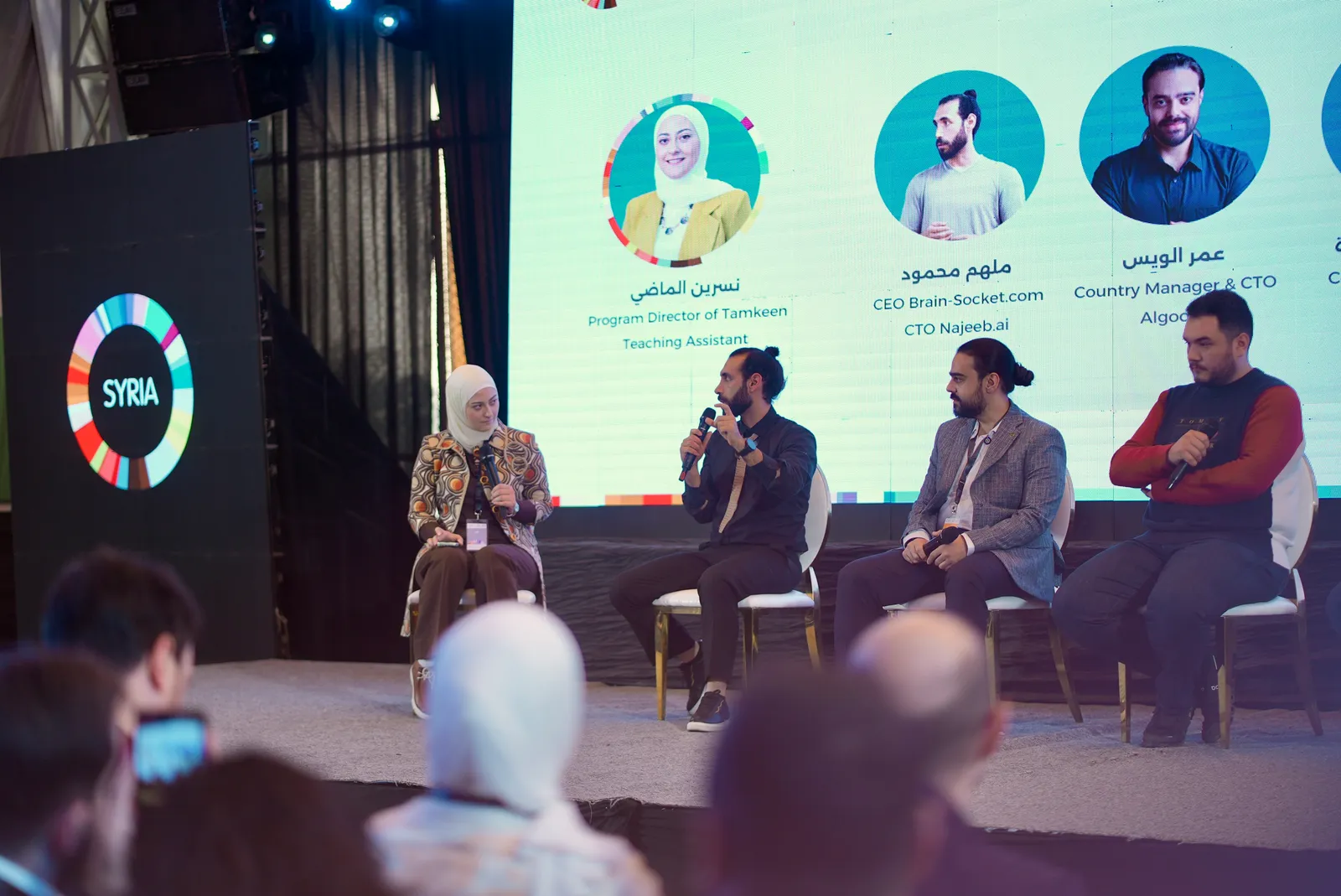
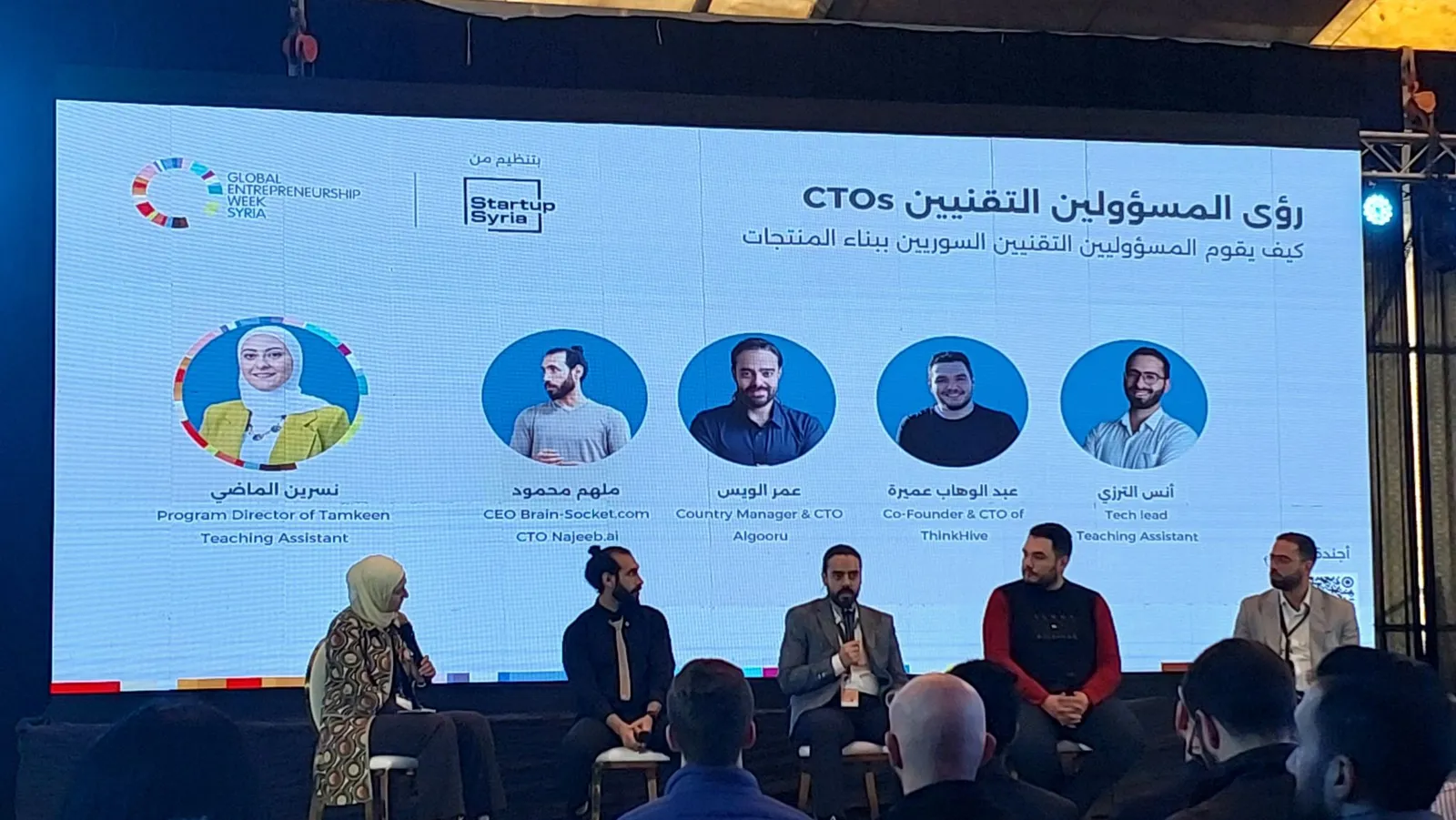
Most startup panels are about raising, hiring or selling. This one was about the part underneath: رؤى المسؤولين التقنيين — CTO Insights, five technical leaders at the first Global Entrepreneurship Week in Damascus, on how Syrian CTOs actually build products. Our CEO, Molham Mahmoud, was one of them.
Who was on it
The session’s own subtitle was the question it set out to answer: كيف يقوم المسؤولين التقنيين السوريين ببناء المنتجات — how Syrian technical leaders build products. Five people took it on, each running engineering somewhere different.
- Nesrine Al-Madi — Program Director of Tamkeen, Teaching Assistant
- Molham Mahmoud — CEO, Brain-Socket.com · CTO, Najeeb.ai
- Omar Al-Weis — Country Manager & CTO, Algooru
- Abdulwahab Amira — Co-Founder & CTO, ThinkHive
- Anas Al-Tarzi — Tech Lead, Teaching Assistant
Managing change, which is most of the job
The topic that took the most air was change: how a technical leader absorbs it when the product, the market and the funding can all move in the same quarter. It is the part of the role nobody interviews for. You are hired to build a thing, and then spend most of your time deciding which parts of the thing survive contact with what the company has just learned.
The honest version of that answer is architectural rather than managerial. Deciding what to make easy to change is a technical decision taken long before anyone asks for the change — and getting it wrong is how a six-week pivot becomes a six-month rewrite.
Why a startup is not a client
The other thread, and the one that separates this panel from a general engineering talk: building your own product is a fundamentally different job from delivering for a direct client, and the difference is not the code.
A client engagement has an edge. There is a scope, an acceptance criterion, and a moment where the work is done and correct. A startup has none of those. Nobody signs off. The requirement is not written down anywhere because nobody knows it yet, and the same team that builds the thing has to decide whether it was the right thing — then live with the answer. Engineers who move from services into product usually find the ambiguity harder than the technology.
It is a distinction worth hearing from people doing both, which several on that stage were.
Najeeb.ai, and what Molham brought to it
Molham sat on the panel as CTO of Najeeb.ai, an advanced healthtech company in Saudi Arabia working with the insurance sector — which is a useful vantage point for a conversation like this one. Insurance healthtech is the opposite of a greenfield: regulated, integration-heavy, and unforgiving about correctness. Change management stops being a philosophy there and becomes a constraint you can measure.
كيف يقوم المسؤولين التقنيين السوريين ببناء المنتجات
Why the panel existed at all
A first Global Entrepreneurship Week in Damascus implies there had not been one. A CTO panel inside it implies something narrower and more encouraging: enough companies with enough engineering depth that five technical leaders can be put on a stage and disagree usefully. That is not a given anywhere, and it was not a given here five years ago.